
Face. Off.
aka if you're playing God with your own face, do you really know why babes???...

(Welcome. Would you mind awfully tapping the little heart at the top or bottom of this post love? It helps more people discover my work & makes me feel deliciously seen (& wildly grateful). For £8/month, £80/year, or for £147 as a Founding member (you luscious divine darling being, I love you), you can support this writer and newly debut author of ‘The Story Of The Deer Woman’. Thank you for being here, reading & walking this wild path with me.)
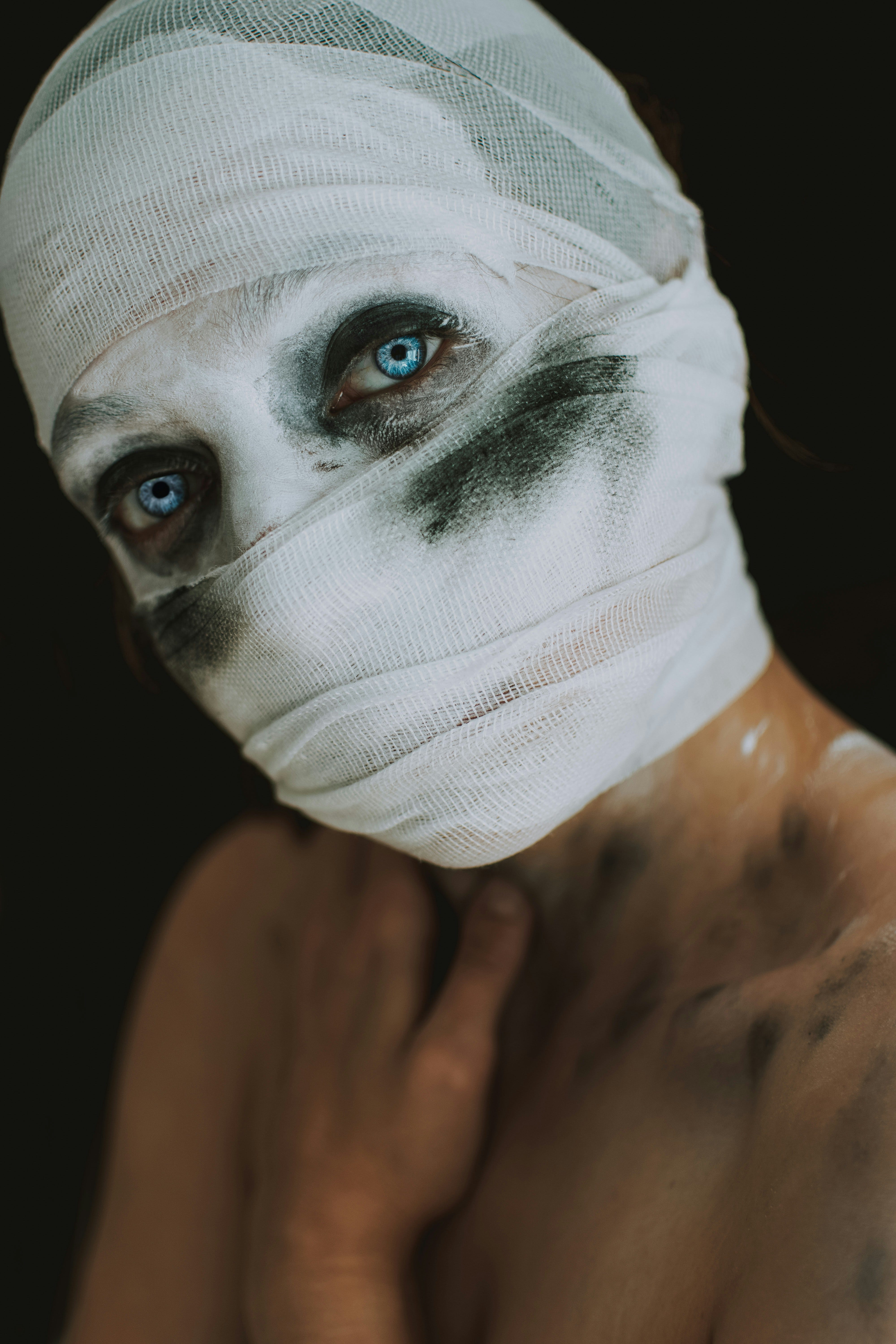
I thought I’d invest in some facial oil for, you know, my ageing, decrepit, carcass inviting, skin*
(*Just amplifying the descriptive characteristics for drama babes, fyi!)
Off I popped to Holland & Barrett and before you come at me, I’ll have you know that sadly, my beloved Neals Yard store has closed down on King Street, leaving me, and my skin, bereft.
I was feeling jazzy and fanciful and, flush. How did I know this? Well, because that week, I’d also gone and purchased some Extra Virgin Olive Oil for me to desecrate and degrade. Not in a pervy way mind you. Sigh. Not yet anyways (looks around hungrily…)
So, there I am in H&B and having been thrust upon by a very enthusiastic twenty-something year old with gorgeous elastic skin and having been shown all manner of supposedly miracle facial oil for women of a certain age, I asked for just some base oil please. For I wanted to make my own. Like a witch. That I sometimes believe that I am. Sometimes.
Armed with a bottle of almond oil, I arrived at the till with pure Rose, Geranium and Ylang Ylang oils, ready to mix a potion so enchanting that my skin will be screaming come hither rather than come wither.
Hmmmmm. I’m not going to lie. Though it sure feels gorgeous to go to bed with this luscious, viscose layer of dew on this Jew’s face, the scent hasn’t quite worked out the way I thought it would. There’s a slight unsettled nagging feeling that I’ve just entered the territory of nan’s perfume range, you know, the one that Boots would stock back in the day.
Never mind.
For at least I’m not playing Mr Potato Head with my own fuckin face!!!
Yes. I’m speaking about the rampant, and weirdly ‘normal’, activity of facial procedures, designed to toy with reality. As if, by some hocus pocus of devilish nonsense, time will pass over you, like some holy fuckery, and deliver you straight into the immortal hands of eternity.
Cosmetic surgery and its ilk is a living, ahem, breathing, part of this current zeitgeist that we find ourselves in. Whether that’s a nip and tuck, a staple here and there, Botox injections, lip filler, peels or other such face skin fashioning, as if skin was a material to snip and zip and tailor to one’s own fancy. Which let’s be honest, these days it is.
A trillion-dollar industry for the consumerist powers that be to hit the never-ending jackpot rollover with. For as long as there’s a need, there’s a greed.
I have to say, I’m both fascinated and appalled by the whole damn thing.
And maybe there’s a reason for that. Hear me out.
I was born with a strawberry red, port wine birthmark, on the left side of my face by my nose. A friend at school said it was shaped like the map of England, so, erm, helpful I guess if I was on holiday, separated from my parents, and without a tag a la Paddington.
From a very, and I mean very, early age, this was purposefully covered up by my mom (and yes, I’ve done the work over the years. Believe me I’m cool now) with make-up, whenever I was all dressed up in some 70s finery for a birthday party or something social.
I struggled as I grew up, already a shy and self-conscious skinny little thing, the message that there was something on my face to be ashamed of and hidden, drilled deep into my subconscious and sense of self. For many reasons I lacked confidence, and this thing, this mark, on my face, didn’t help one iota.
Cue, endless rounds of laser surgery. Little touches of what felt like cigarette burns, complete with the burning scent of hair. Crusted scabs. Soreness. And the frustration that it didn’t get rid of the birthmark all together.
Throughout my teenage years, then into university and onwards into the uncertain-selfed landscape of my twenties, I used make-up to cover up this mark on my face. It wasn’t until the age of 31 years young that, upon my return from a 3-month trip to Thailand, I stopped wearing make-up to hide it. I recall this moment vividly. Sitting on the edge of my bath, concealer in hand, crying, a choice made to, well, be me.
The irony is that I don’t think having a birthmark on my face ever made the slightest difference in how anyone saw me. And, as life’s paradox goes, I seemed to invite much more male attention post hiding. Go figure. Also, it’s worth noting that this birthmark isn’t huge. I’ve seen bigger.
Anyways, the point is this: I’ve always had the awareness of my face being ‘different’ in some respect. I came to see my birthmark as an essential part of my, ahem, make-up, and these days I don’t even notice it at all. But it gave me a fascination with body markings, tribal decorations, flesh aesthetics that signified symbols of myth, magic and the sacred connection to a beauty far deeper than the surface one we all get stuck in.
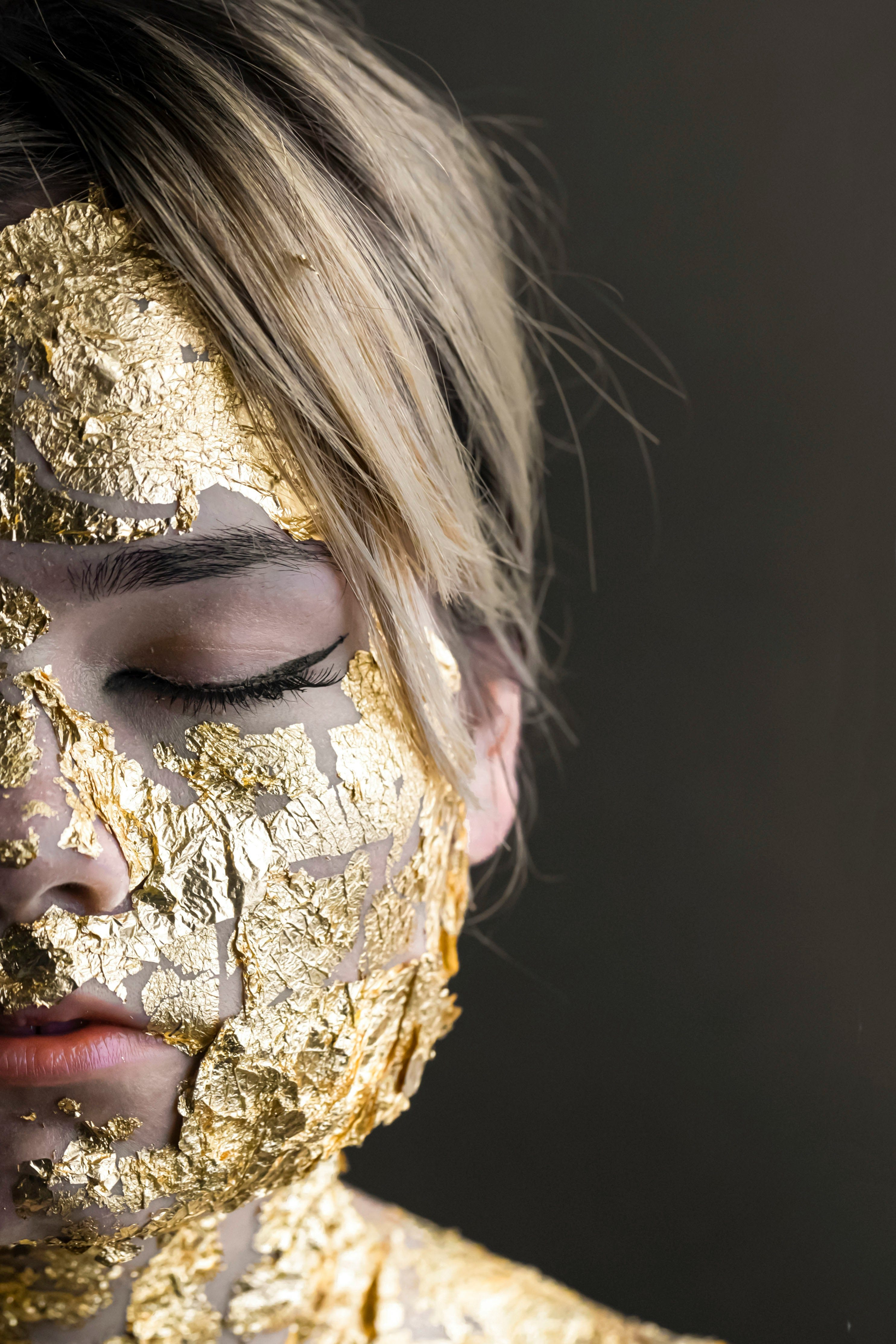
My first ever book I wrote, that has never seen the light of day, bless it, dealt with markings on skin. I’m currently writing a novel which has tattoos as part of the tale. And I’m a glutton for the transmutation of the body, mainly through body horror, whether via watching movies, reading or writing about it.
So, on one hand I’m not against the transmogrification of flesh. Yet, on the other hand, it’s the intention that sits behind that bothers and disturbs me. (Writing that actually makes me smile wryly: I can watch the most disturbing body horror and love it, yet someone’s face all pulled and taut and uncanny, leaves me feeling uneasy.)
Over the last few years there has been a rise of visual media that addresses this current obsession with bodily change. (And yes, I’m very well versed in the likes of Cronenberg, the father of body horror). Everything from the lauded 2024’s ‘The Substance’, to this year’s Ryan Murphy show, ‘The Beauty’. I’ve watched two Asian centred horror movies, 2025’s ‘Slanted’ and 2024’s ‘Grafted’ that, as their names might suggest, approach the need to change one’s face in order to be more ‘western’ in appearance and thus, allegedly, more desirable.
Hell, even this year’s Met gala, a Clive Barker-esque wet dream of the hideous hypocrisy and horror of Hollywood, was not immune to the topic, with Bad Bunny made up as himself as an older man, embracing ageing. Funny how it’s a man doing that. God forbid any of the women deigned to show themselves in that way. Right?!
There’s a variety of reasons for playing Frankenstein with one’s face. And I’d like to address a few of them here. But first, let’s look at the history of cosmetic surgery. For it’s easy to point the figurative, and in the case of ‘The Substance’, atrophied, finger at the fear driven desire to trick ageing, and ultimately, possibly, death.
Cosmetic surgery first began, simply, as reconstruction. One of the earliest known surgical traditions comes from ancient India around 600 BCE through the physician Sushruta, often called the father of plastic surgery. In the Sushruta Samhita, techniques for rebuilding noses using skin flaps from the forehead were described in detail. Interestingly, nose amputation back then, was a punishment for adultery or crime, which makes me think about that odd phrase: to cut off your nose to spite your face. So, in that context, reconstructing the nose was not merely cosmetic, but part of restoring social dignity. That is, survival and belonging.
The Greeks and Romans also developed surgical techniques for repairing ears, lips, and damaged tissue, though surgery remained dangerous and limited. And then for centuries afterward, cosmetic intervention existed mostly in the shadows because religious and medical cultures often viewed altering the body as morally suspicious or physically reckless. Indeed, as a Jew, I have been reminded by my folks upon occasions when I’ve talked about getting a tattoo, that we’re not meant to desecrate nor mark our bodies, as we have to be whole and untarnished when we’re buried. Hmmmmm, she thinks remembering a not-too-distant memory of unwelcomed markings on a Jew’s skin.
However, it’s when we jump to the last century, where the real birth of modern plastic surgery began. The impact of World War One, not only devastated homes, cities and the population, but industrial warfare created catastrophic facial injuries from bullets, shrapnel, and explosions. Thousands of soldiers survived injuries that would previously have killed them but were left profoundly disfigured ~ for some reason my celluloid loving mind is now thinking of that 1996 movie ‘The English Patient’.
Soldiers often experienced shame, social isolation, and an inability to reintegrate socially and so facial reconstruction thus became physical, emotional and psychological medicine, with surgeons such as Harold Gillies pioneering reconstructive facial surgery in Britain, developing skin grafts, flap techniques, and staged facial reconstruction procedures.
Not only were these important for our already discussed historical sense of societal integration and sense of belonging, but for another very vital reason. And this is where my interest in this whole cosmetic surgery malarkey really gets piqued.
The impact upon the nervous system.
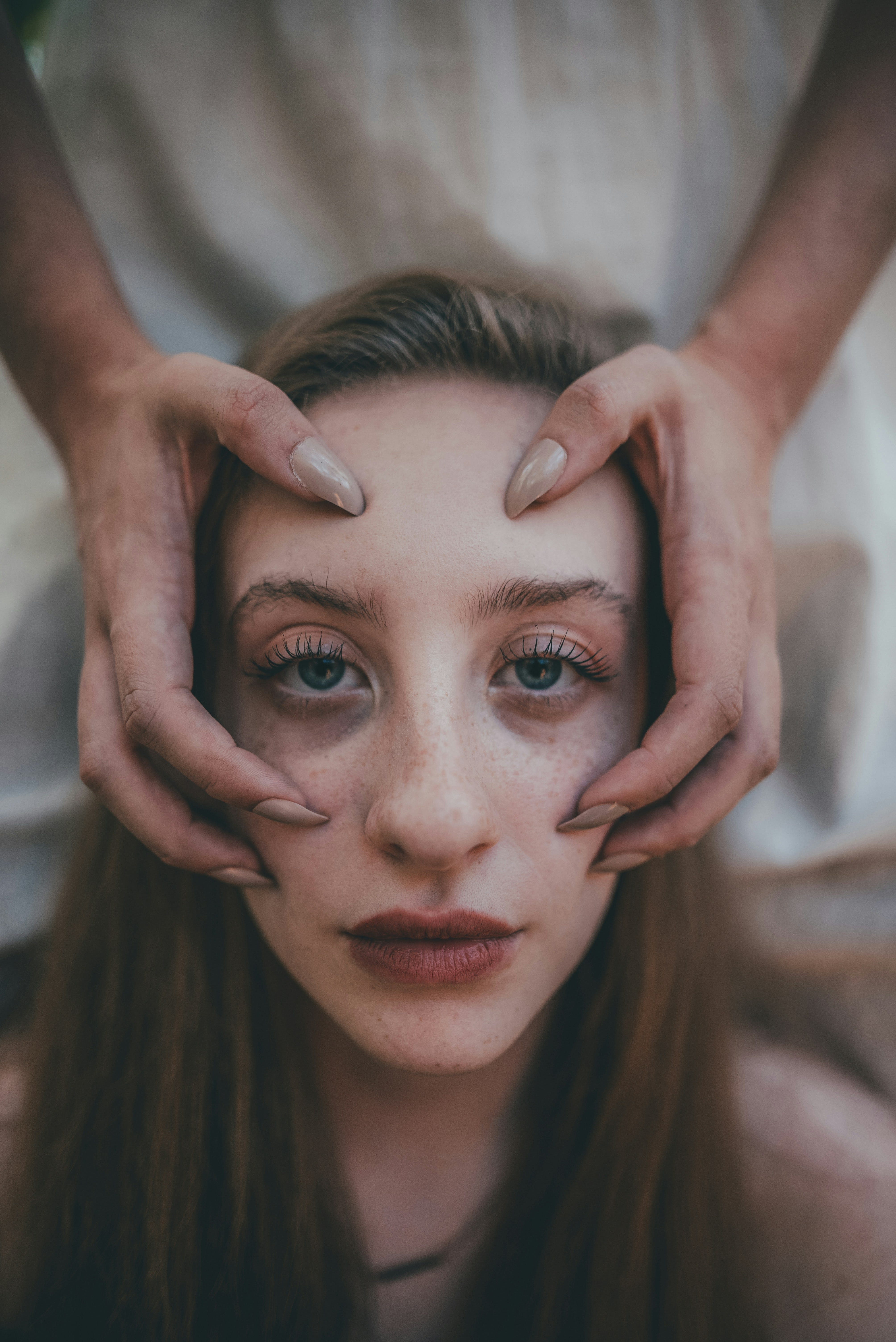
Sure. Reconstructive surgery may not do much for the inner trauma and stress endured by said soldiers upon the battlefield, but as far as connection, and thus a sense of safety and potential regulation is concerned, our face matters. Why? Because our face is a social organ. Human nervous systems constantly, and rapidly, read faces for certain cues which then affect our sense of safety, attraction, threat, belonging and emotional recognition. The autonomic nervous system constantly scans social environments through a process known as neuroception, a concept developed by Stephen Porges in Polyvagal Theory. From this perspective, appearance is not superficial to the nervous system, it’s social information.
Maybe this was never an originally intended reason ~ nervous system and trauma are indeed relatively recent acknowledgments ~ but inadvertently, plastic surgery evolved partly because humans are relational creatures whose biology is deeply tied to appearance and recognition in creating safety, trust and regulation. After all, no matter how much man assumes a God-like power (which let’s face it, shows itself most glaringly in the act of war), we are, at our core level, simply animals in nature.
Applying this further, when war is no longer a reason to mess about with our faces, what is the longer-term impact of the very obvious incongruency between what someone says they’re feeling and what we’re noticing in their facial and thus physiognomy? Surely this breeds distrust. Confusion. Suspicion. Separation.
And man, aren’t we already suspicious enough? Are we not living in times already provoking us to be divisive and fearful of each other? Isn’t that break in humanity simply a way for the powers that be to push against those weak cracks in our psyche and use that to control us even more?
This disconnect from our own bodies is such an obvious sign of how disconnected we are from our original animal nature, and from the earth itself. This lack of respect, both for our own flesh and for mamma nature itself is on show for all to see. One could say its simply self-hatred run riot or body dysmorphia, but one thing’s for sure, it’s Narcissus’ story brought to life.
Enter Hollywood stage right.
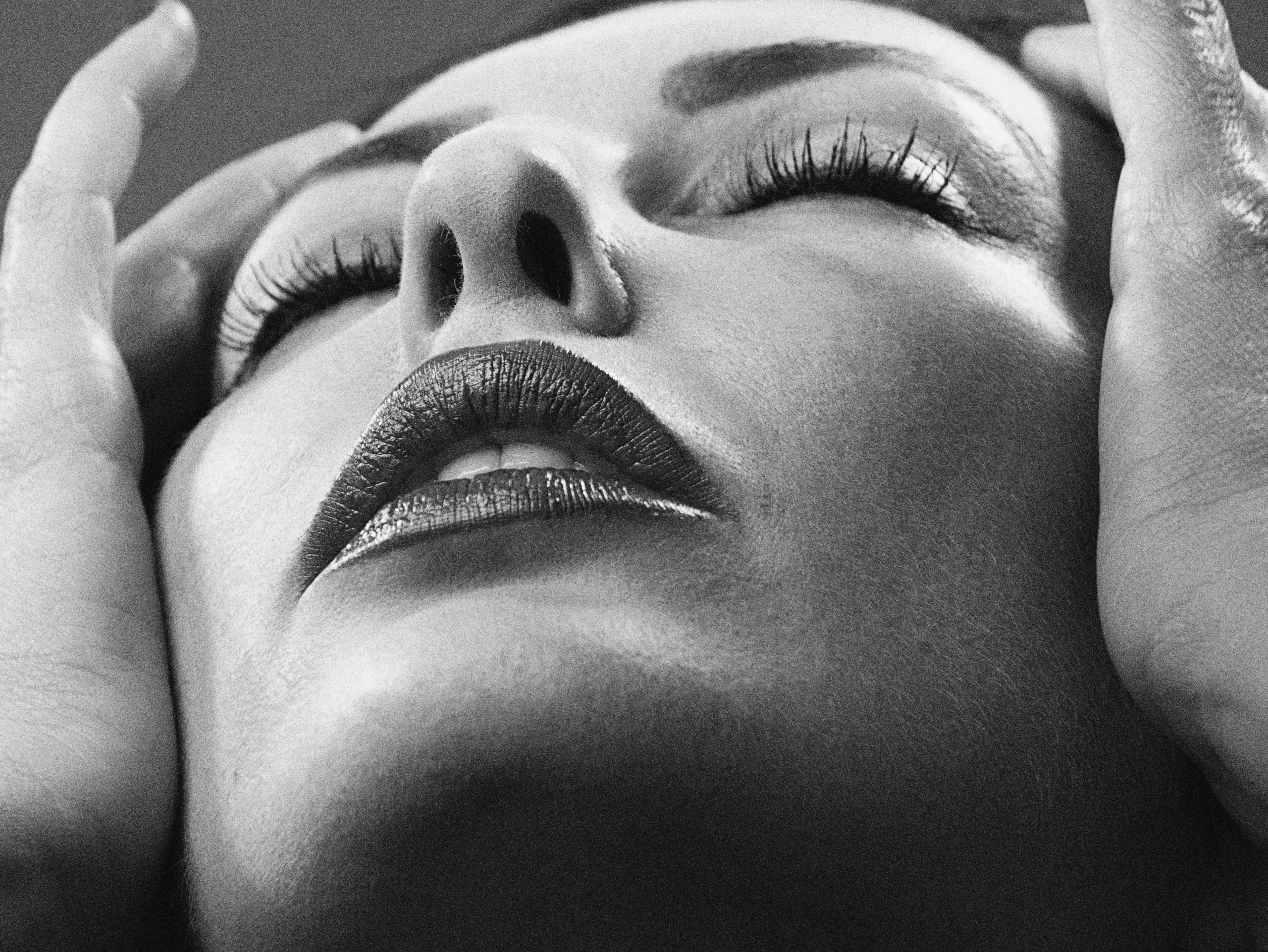
Between the 1920s and 1950s, surgery increasingly moved beyond reconstruction into elective beautification. Why? Because all of a sudden, appearance was no longer local and private. It became public, reproducible, and comparable as the rise of celebrity culture began. Now we have cinema close-ups, photography, department-store beauty industries and, post-war, the advent of consumer capitalism. Procedures such as facelifts, rhinoplasty, eyelid surgery and breast augmentation became increasingly normalised among wealthier classes. The surgeon shifted from healer to aesthetic architect.
And this is where modern tensions begin. Is surgery liberation? Conformity? Self-expression? Self-rejection? Empowerment? Nervous-system adaptation to social pressure?
The answer is often all of these all at once. Which brings us right up to the late 20th century, with cosmetic surgery becoming more intertwined with advertising, media, television, fashion, youth culture (a huge part of the 1990s) and celebrity aspiration (mainly via glossy magazines you could ‘read’ in the comfort of your home). Several technological developments accompanied and thus accelerated this growth with the introduction of silicone implants, liposuction, laser treatments, safer anaesthesia and more beauty-focused, minimally invasive procedures.
We’re now living in a time here in Western culture where increasingly we’re framing the body as a project, something to optimise. This shift parallels the prevailing broader economic ideology of productivity, self-management, branding, and competitive desirability. Beauty has become social capital. A ‘good’ face or body has ‘value’, and can influence everything from dating, employment, income, social media visibility and perceived authority. Just ask those troubled young men promoting looksmaxxing!
And with that, welcome to the 21st century, and the introduction of influencers, smart phones and of course, social media.
The ‘smart’ phone has changed cosmetic surgery more radically than almost any surgical innovation. For most of history, people saw themselves occasionally in pocket mirrors, in paintings or through other people’s reactions. Today people see themselves constantly, whether that’s through selfies, zooms and video calls, filters, curated feeds and algorithmic beauty comparisons. This has created what some psychologists call continuous self-surveillance. And yet, our nervous system is not evolutionarily adapted for permanent visual comparison, mass-scale beauty ranking or exposure to thousands of enhanced faces daily. And as a result, body dysmorphia has increased, appearance anxiety has intensified and cosmetic procedures have become younger and more normalised.
The rise of ‘Instagram face’, characterised by high cheekbones, full lips, smooth skin, symmetrical features and exaggerated femininity shows how technology compresses beauty standards into globally repeated templates. Ironically, procedures meant to create individuality often produce homogenisation.
We’re still trying to fit in, aren’t we?! But to what exactly? And at what cost? Beauty is in the eye of the beholder, and yet we don’t see truth, we only see what our lens of prediction sees. We’re the blind leading the blind. So, the question remains, who are we trying to impress?
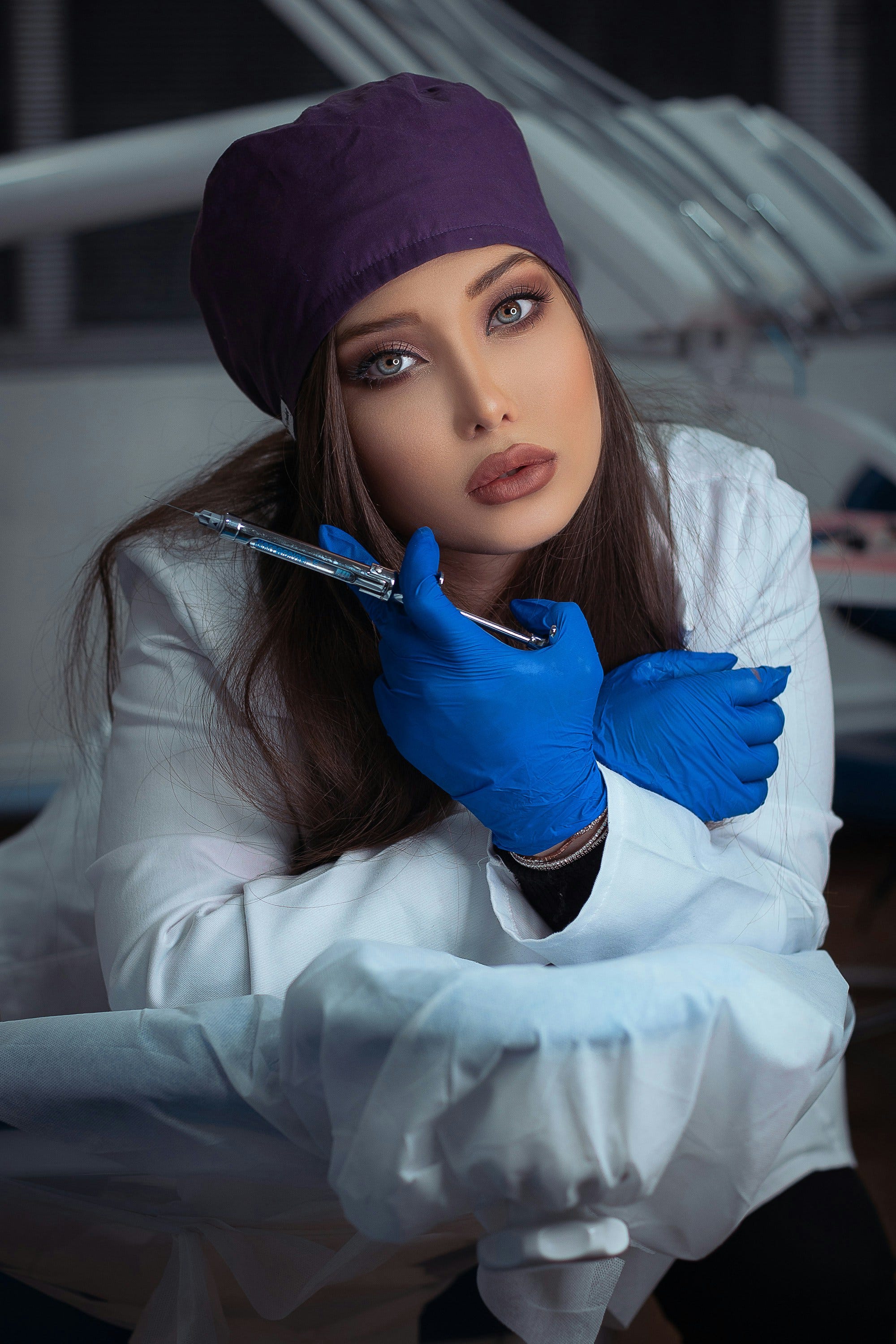
Is the modern-day answer simply rooted deeply in that old fuckery of patriarchy? Or is that just a lazy, half-assed answer? On one hand, cosmetic surgery sits inside a major feminist tension between the argument that beauty industries exploit women’s insecurity and the ideal body, and that agency over one’s own bodily autonomy matters, beauty practices can be expressive and pleasurable, and that ultimately rejecting cosmetic work as ‘fake’ and rooted in something ‘wrong with us’ can itself become moral policing.
One last thing that often gets left out of this conversation: what happens when things don’t go to plan? Or when things go terribly wrong? And don’t even get me started on the horrors post-surgery ~ the pain, the healing, the part where it hasn’t quite worked. And does this really affect real inner transformation too?
We could also add in here the addiction to pain, punishment, masochism and self-hatred. I mean, hell, don’t we have a whole consumerist culture feeding off of ‘self-love’? For the thing is, if there’s self-love, then there must be self-hatred, right?! And don’t we, as women, know all about beauty as pain? From wearing high heels, corsets pulled far too tight, ribs removed, geisha foot-binding, waxing, tweezing, plucking ~ we’re basically factory farm animals at this point!
People often pursue cosmetic surgery hoping for confidence, acceptance, relief, visibility, control, romantic success or reduced shame. And whilst many genuinely experience positive outcomes, surgery can also become entangled with a compulsive need for the endless quest for perfectionism. Basically, the notion that our identity has become something to be externally validated. The impact this has is more insidious on a biological nature, for our nervous system never fully arrives at safety when the goalpost keeps moving creating constant hypervigilance, obsessive self-monitoring, social anxiety, and an even greater dissociation from our bodily experience. This is one reason some people report that even after major transformations, internal insecurity persists. The surgery altered the image yet, obviously, did not necessarily alter the nervous system patterns underneath it.
Obviously. Sigh.
In essence, we’re just changing a filter. Like we would a photo on Instagram! The self, no longer a lived-in experience with a profound inner life of depth and substance, has become something endlessly editable. That for me is terrifying. Not such as a moral and existential question, but how it then changes our relationship to authenticity, aging, identity, and embodiment.
For most of human history, faces aged naturally within communities where everyone aged together. Now people are comparing their unfiltered face against filters, ring lights, celebrities, AI-enhanced images, injectable culture and surgically optimised influencers.
And historically, aging carried social meaning: elderhood, wisdom, transition and mortality. Whereas contemporary beauty culture often frames aging as error, decline, loss of market value, something to fight indefinitely. So cosmetic intervention becomes not just aesthetic, but existential, an attempt to negotiate time itself.
All of this is, unsurprisingly, exhausting. Because if the body is never allowed to simply be, then our nervous system never fully exits performance mode. Paradoxically, the people who often feel most magnetic are not necessarily the most perfected, but the most embodied. The nervous system reads congruence, aliveness, warmth, safety and vitality. So, in that respect, does it really fucking matter what we look like?
Look. I’m not standing on one side or the other. Like Eros, I have one foot in both. Really, freedom of expression is a field I’d die in and for. Yet, to know why, to really be super empowered in whatever decision you choose to take for using your own flesh as performance art, your own skin as canvas, is the most radical thing you can do.
Then, with perfect clarity, you can weave, tailor, and fashion away, my pretties!
Just my two cents worth! X
What do you think? What’s your thoughts and relationship to and with cosmetic surgery? Would love to know dear ones X Thank you for reading X
Want to play out in my world, darling creative? Check out my offerings over on my WEBSITE. The 8% Club! Creative Membership is a pretty spectacular community to have thesed kinds of conversations about life, art, our creative process, women and so much more. You can learn more about it HERE.
Personally, I really dislike botox and cosmetic surgery (for vanity purposes).
There is nothing more beautiful to me than seeing genuine emotions, imperfections and wrinkles on other people's faces.
I guess I can't say what I will feel like about my own face, later on in life, but it does make me feel sad people feel they need to change their bodies and faces.
Sometimes I wonder what affect it has socially, when we cant see emotions and the subtle facial expressions. For kids who have parents with botox.
Like you said, who is it for? Themselves hopefully. But I do think it often speaks to something deeper than the skin.
I would much rather see a real, unique, expressive face any day!